Faulkes Telescope 7s2 (30th June 2010)
A lovely clear sky for class 7s2 to do their viewing.
It was an amazing experience for the students who took turns to control the telescope by first entering the RA and Dec (Right Ascension and Declination...the astral equivalent to longitude and latitude).
Once the telescope had shown the area of sky to be imaged, it was time to push the 'move telescope' button. It amazed the class to see the telescope moving even though it was dark. A smaller infrared telescope detects the heat the Faulkes Telescope has absorbed (takes in) in the daytime and emits (sends out) for some time after the sun goes down.
Not only did we have a clear sky, but the sky objects the students chose to image were fairly close together, and we managed to take pictures of five different objects...all very beautiful!
An open cluster 
Sky Object Name: m25
Taken By: Uplands Community College
When taken: Jun 30, 2010 11:34:25 UTC
RA: 18h31'36"
DEC: -19°15'00"
Filter: RGB
Exposure time: 10 secs.
Instrument: EM01
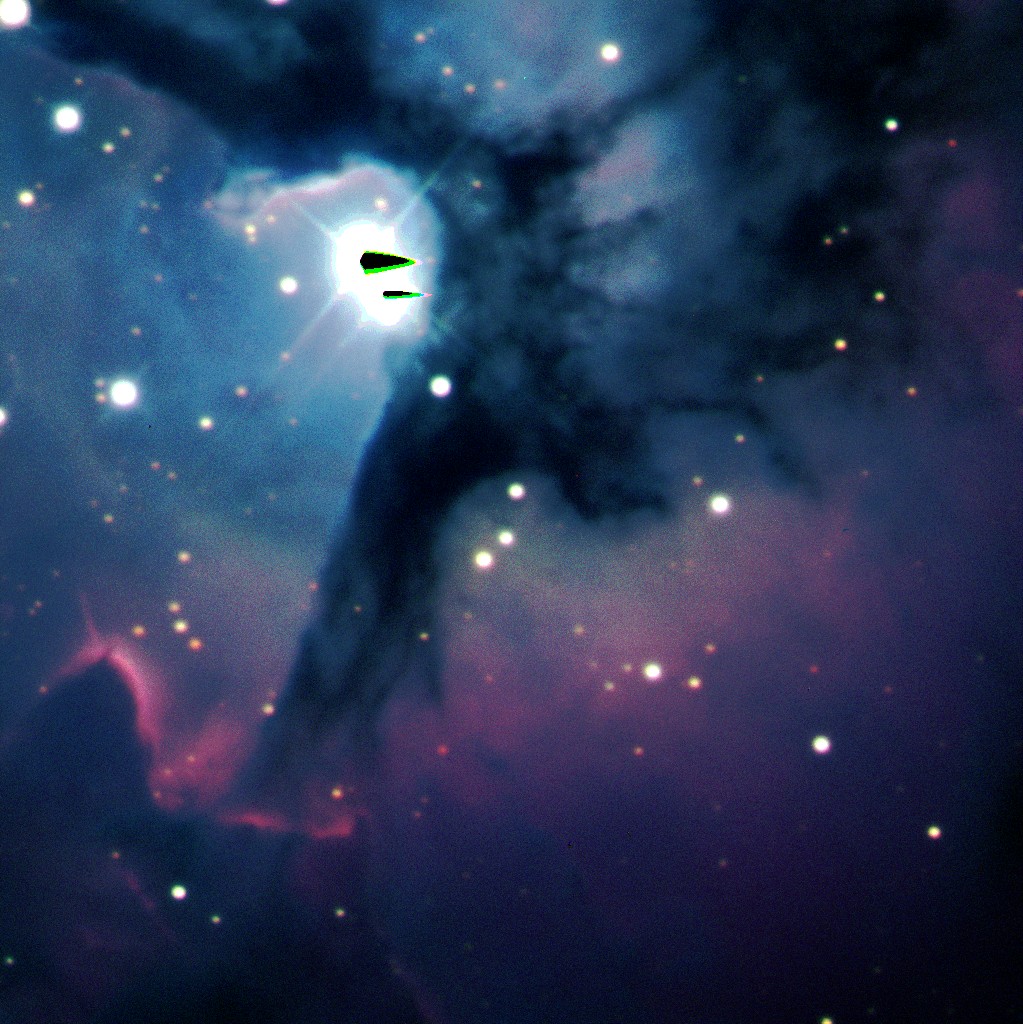
Triffid Nebula 
Sky Object Name: m20
Taken By: Uplands Community College
When taken: Jun 30, 2010 11:39:58 UTC
RA: 18h02'20"
DEC: -23°03'10"
Filter: RGB
Exposure time: 30 secs.
Instrument: EM01
Eagle Nebula 
Sky Object Name: m16
Taken By: Uplands Community College
When taken: Jun 30, 2010 11:45:20 UTC
RA: 18h18'52"
DEC: -13°49'42"
Filter: RGB
Exposure time: 30 secs.
Instrument: EM01
Ring Nebula 
Sky Object Name: m57
Taken By: Uplands Community College
When taken: Jun 30, 2010 11:49:59 UTC
RA: 18h53'36"
DEC: 33°01'40"
Filter: RGB
Exposure time: 3 secs.
Instrument: EM01
Dumbell Nebula 
Sky Object Name: m27
Taken By: Uplands Community College
When taken: Jun 30, 2010 11:57:49 UTC
RA: 19h59'36"
DEC: 22°43'00"
Filter: RGB
Exposure time: 30 secs.
Instrument: EM01
It was an amazing experience for the students who took turns to control the telescope by first entering the RA and Dec (Right Ascension and Declination...the astral equivalent to longitude and latitude).
Once the telescope had shown the area of sky to be imaged, it was time to push the 'move telescope' button. It amazed the class to see the telescope moving even though it was dark. A smaller infrared telescope detects the heat the Faulkes Telescope has absorbed (takes in) in the daytime and emits (sends out) for some time after the sun goes down.
Not only did we have a clear sky, but the sky objects the students chose to image were fairly close together, and we managed to take pictures of five different objects...all very beautiful!

Taken By: Uplands Community College
When taken: Jun 30, 2010 11:34:25 UTC
RA: 18h31'36"
DEC: -19°15'00"
Filter: RGB
Exposure time: 10 secs.
Instrument: EM01

Taken By: Uplands Community College
When taken: Jun 30, 2010 11:39:58 UTC
RA: 18h02'20"
DEC: -23°03'10"
Filter: RGB
Exposure time: 30 secs.
Instrument: EM01

Taken By: Uplands Community College
When taken: Jun 30, 2010 11:45:20 UTC
RA: 18h18'52"
DEC: -13°49'42"
Filter: RGB
Exposure time: 30 secs.
Instrument: EM01

Taken By: Uplands Community College
When taken: Jun 30, 2010 11:49:59 UTC
RA: 18h53'36"
DEC: 33°01'40"
Filter: RGB
Exposure time: 3 secs.
Instrument: EM01

Taken By: Uplands Community College
When taken: Jun 30, 2010 11:57:49 UTC
RA: 19h59'36"
DEC: 22°43'00"
Filter: RGB
Exposure time: 30 secs.
Instrument: EM01
Once we lost control of the telescope again, it was the students' chance to ask questions. We covered areas such as
- The size of our sun compared to other suns, how stars form and that our sun is a star;
- Black holes - how they are made, whether they have been seen, where everything that's sucked into them goes (and whether or not anyone has ever fallen into one!)
- The difference between Supernovas and Hypernovas (a matter of size...)
and many more fascinating questions.
Labels: Dumbell, Eagle Nebula, Faulkes Telescope, M16, M20, M25, M27, M57, open cluster, Ring Nebula, Triffid Nebula, Yr 7
posted by Unknown at
2:14 pm
All 0 Comments left by stargazers will disappear into a black hole unless read!




 Ophiuchus
 Mr Meteor


